
KEEP IT FAIR
Change one thing
Decide what you are testing and keep everything else the same: amounts, sizes, timing, place.
Try the fair test checkKITCHEN-TABLE SCIENCE
A fair test is the simplest habit real labs share, and you can run one at home.
Which kitchen paper soaks up the most? Do beans sprout faster in the light? Results only mean something if the test is fair, repeated and written down. Here is how scientists make sure, in plain English.
Check your test Read the short answer
THE SHORT ANSWER
Three habits separate a real result
from a lucky one.
KEEP IT FAIR
Decide what you are testing and keep everything else the same: amounts, sizes, timing, place.
Try the fair test checkMAKE IT HOLD
One try can be a fluke. Repeating a test shows whether the result is real and how much it varies.
See what repeats revealedKEEP A RECORD
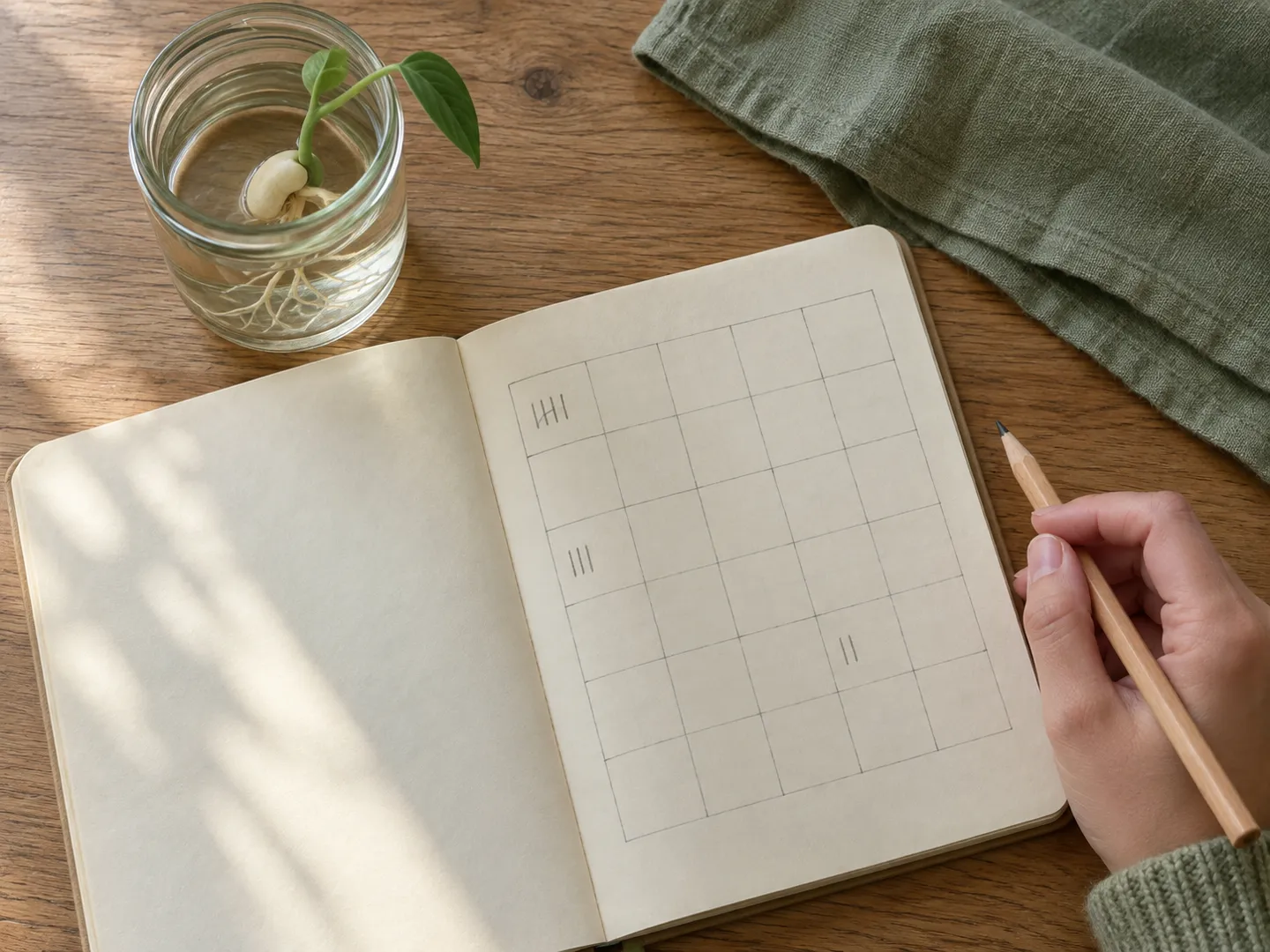
Date it, note what, why and how, and keep the results you did not expect as well as the ones you did.
How labs keep notesA QUICK FAIR TEST CHECK
You want to compare three brands of kitchen paper. Pick how you would run the test and see how it rates.
The ratings follow the principles in England’s primary science curriculum and the research linked below. They are a guide, not a marking scheme.
TWO STUDIES WORTH KNOWING
Even professional results can shrink
when the test is run again, or judged blind.
REPEAT IT · 2015
Significant results, original vs repeat
97% vs 36%
A team repeated 100 published psychology studies. Almost all the originals had reported a significant result; only about a third of the repeats did, and the effects came out about half as large.
JUDGE IT BLIND · 2012
Average exaggeration by judges who knew
36%
Across 21 medical trials, assessors who knew which treatment each patient had received reported effects 36% larger on average than assessors who did not know.
Neither study means science is broken. They show why scientists build repeats and blinding into their tests, and why a home test is more convincing when it does the same.
LAB FACTS
England’s national curriculum has pupils setting up comparative and fair tests in years 3 and 4, and recognising and controlling variables by years 5 and 6.
In the 2015 project that repeated 100 psychology studies, the repeated effects were on average about half the size of the originals.
NIH record-keeping guidance asks for entries in ink, signed and dated, with mistakes lined out and dated rather than erased or covered with whiteout.
One University of Pennsylvania lab tells its members to record enough for others to reproduce the results, as the notes may be needed 7 to 10 years after they leave.
In a 2017 survey of Nature journal authors, 36% of those who answered said there was a significant crisis of reproducibility, rising to 41% in the biomedical and life sciences.
TRY IT AT HOME
Before you start, note the question, the one thing you will change and what you will measure. Labs plan before they begin, too.
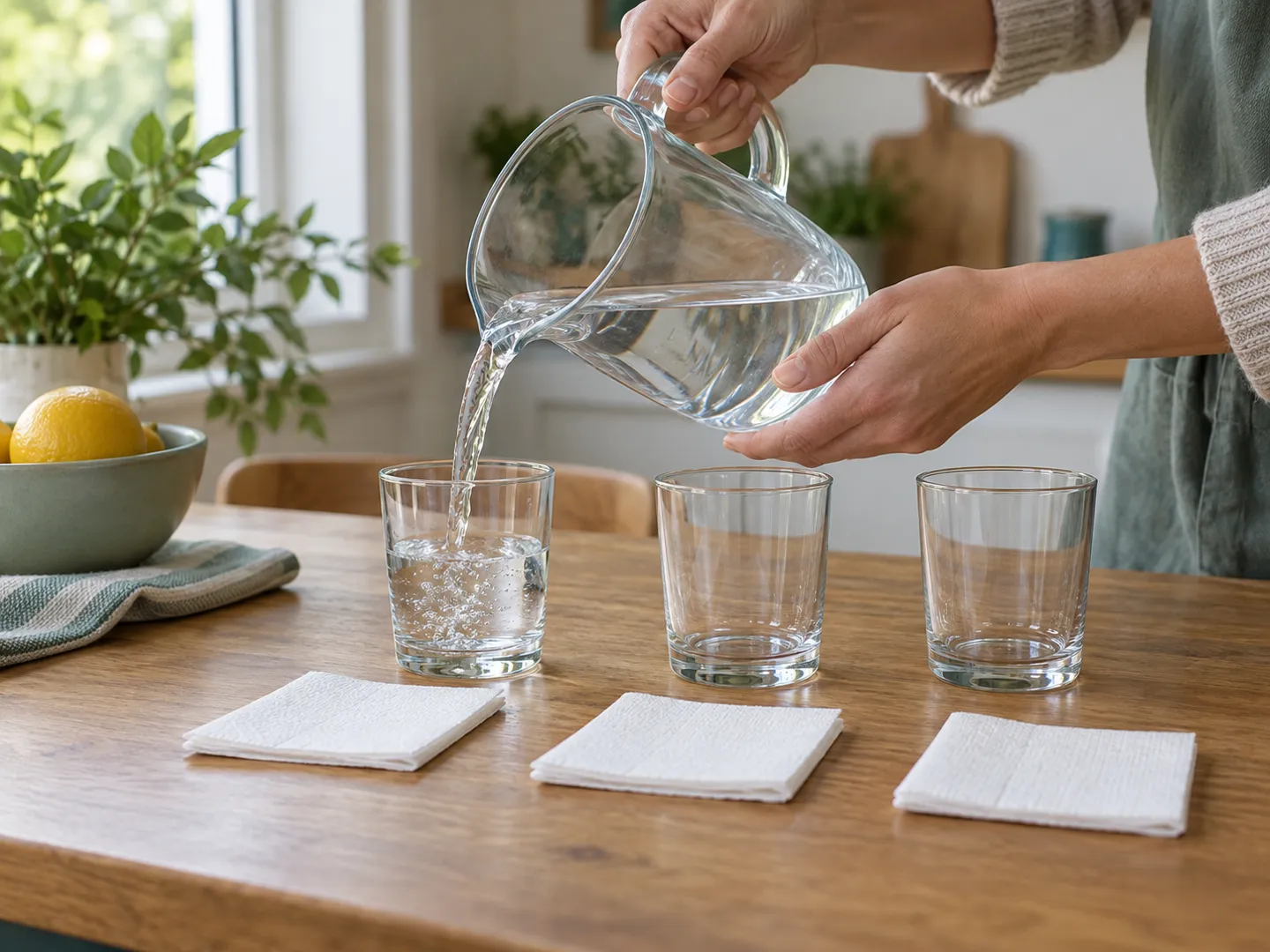
Same amount of water, same size of sheet, same spot on the windowsill, same timing. Each one you hold steady makes the test fairer.
Repeat each version and compare the results side by side. If they jump about, the difference you saw may be luck.
Hide which is which and ask a helper to measure or pick the winner. Then write everything down, surprises included.
QUICK QUESTIONS
Short answers to the questions people ask most.
A fair test changes only the one thing you want to find out about and keeps everything else the same, so that any difference you see can be put down to that one change. In England, pupils start setting up fair tests in years 3 and 4 of primary school.
A comparative test simply compares, such as a plant kept in light against one kept in the dark. A fair test goes further by recognising and controlling the other variables. England’s national curriculum expects this by years 5 and 6.
Because one result can be luck. When researchers repeated 100 published psychology studies in 2015, 97% of the originals had reported a significant result but only 36% of the repeats did, and the effects were on average about half as large.
Expectations can nudge judgement without anyone meaning to. A 2012 analysis of 21 medical trials found that assessors who knew which treatment patients had received exaggerated the effect by 36% on average compared with assessors who did not know.
Date each entry and note what you did, why, how and what happened, including results you did not expect. Professional guidance asks for ink, a line through mistakes rather than erasing them, and enough detail for someone else to repeat the work.
SOURCES
A NAME WITH ROOM TO EXPERIMENT
doodlelab.com is part of the DoodleSale portfolio. Check the current listing and available purchase or lease options.

